Welcome to Mia-Platform v15
Mia-Platform v15
Ready to Master the Vibe?
This release is all about giving you the context and the tools to truly master the vibe of modern, AI-driven software development: a unified place to capture and govern context for AI, smarter ways to orchestrate end-to-end workflows, and a dedicated home for building reliable AI experiences on top of your platform.
This year's headline news is the arrival of three brand-new components of Mia-Platform: Catalog, Flow, and AI Foundry, which expand the platform into context management, workflow orchestration, and AI-powered development. And they are already growing: with the Fall Release, Catalog keeps track of the full history of every item and notifies external systems of every change, while AI Foundry brings event-triggered agentic workflows, multi-agent Playbooks, and shared memory.
But the story doesn't end there: v15 is packed with a wealth of product updates across the entire platform, from column-level data lineage and the new Business Glossary that bring end-to-end traceability and business meaning to your data, to native Bitbucket Cloud support for teams using Atlassian's ecosystem, to the new Fast Data Control Plane v2 for governing real-time data pipelines at scale, and much more.
Read on to discover everything that's new! Features introduced with the Fall Release are marked with the v15 FALL tag.
What's new in v15
Catalog
We are thrilled to welcome a brand-new component to the Mia-Platform Product Suite: Catalog!
Catalog is the centralized place where teams record, classify, and connect any entity that exists in their organization (software components, infrastructure resources, datasets, AI assets, business processes) and make them discoverable across the platform.
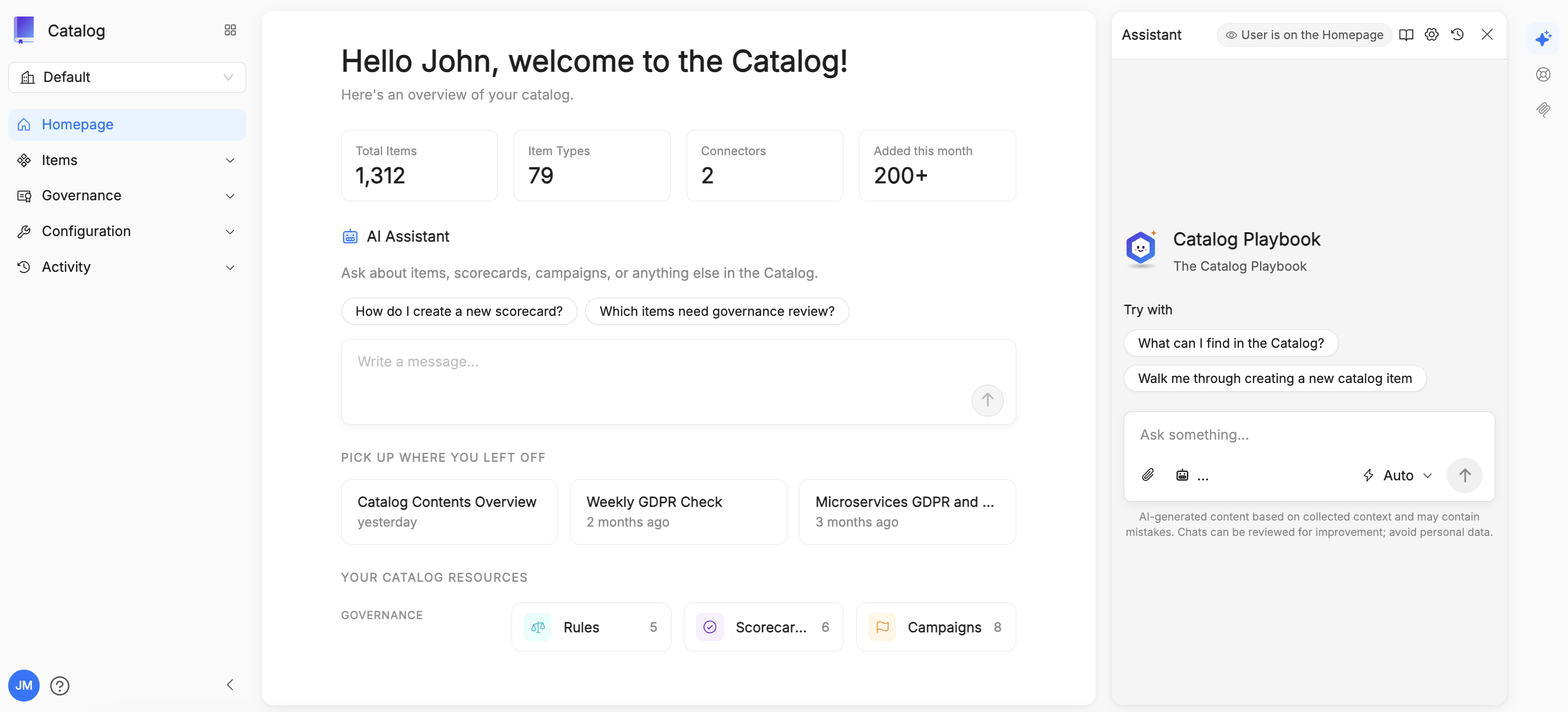
Catalog ships with:
- A Catalog App to browse, create, and curate items, and navigate the relationship graph.
- A built-in compliance layer, made of evaluation criteria, scorecards, and campaigns, to express and enforce organizational standards (security baselines, production-readiness, ownership, …) and drive time-bounded compliance programs with notifications.
- A growing set of connectors, powered by the open-source
ibdmbinary, that keep the catalog in sync with GitHub, GitLab, Bitbucket, Azure, Azure DevOps, Google Cloud, the Mia-Platform Console, and many other tools. - An MCP server that exposes the catalog to AI agents through the Model Context Protocol, making organizational context available to AI workflows out of the box.
- Item Versioning v15 FALL, to track the full revision history of each item, promote revisions to named versions, compare any two states with a line-by-line diff, and roll back when needed.
- Audit Logs v15 FALL, both tenant-wide and per Item Type, to review every action performed on the Catalog for security and compliance purposes.
- Webhooks v15 FALL on Item Types, to notify external services whenever an item is created, updated, or deleted, removing the need to poll the Catalog for changes.
Discover all the details in the Catalog documentation.
AI Foundry
Let's introduce the third new component of this v15 release: AI Foundry!
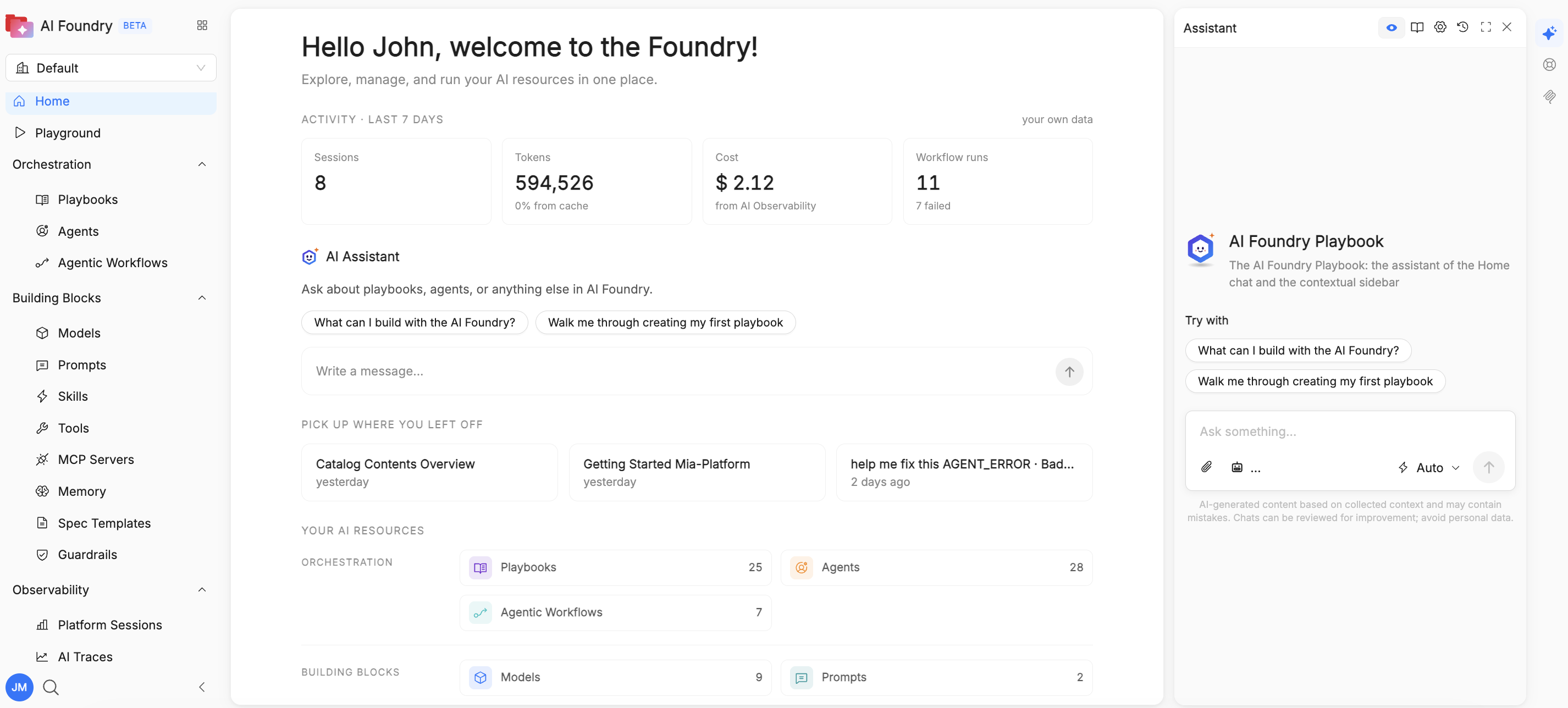
AI Foundry is the new home for building, deploying, and governing AI-powered experiences on Mia-Platform. It provides a unified, web-based environment where teams can:
- Configure Agents backed by the LLM Models of their choice and equipped with curated Tools and Skills.
- Compose multi-step agentic workflows visually with the Playbook Builder, or author them as JSON for full control.
- Manage Prompts as first-class, versioned catalog assets that agents and playbooks can reference.
- Register external MCP Servers to dynamically expand the tool surface available to agents.
- Test everything in real time in the AI Playground, with streamed responses, inline tool calls, and exportable conversations.
- Orchestrate multi-step, event-triggered processes with Agentic Workflows v15 FALL: an item state change, a detected vulnerability, or an external webhook can kick off a fully traceable workflow that enriches context, invokes specialized agents, performs remediation actions, and routes to the right team, with automatic halting if a governance gate fails.
- Build true multi-agent systems v15 FALL in Playbooks, with sequential pipelines, parallel fan-out/fan-in, and supervisor/orchestrator patterns with dynamic routing and hand-off between agents.
- Give Playbooks a Memory layer v15 FALL, with per-user short-term and long-term memory persisted across runs and team-shared memory governed by RBAC.
- Analyze cost and consumption with richer token usage data v15 FALL per run in AI Traces.
Discover all the details in the AI Foundry documentation.
Flow
Say hello to Flow, the newest component joining Mia-Platform!
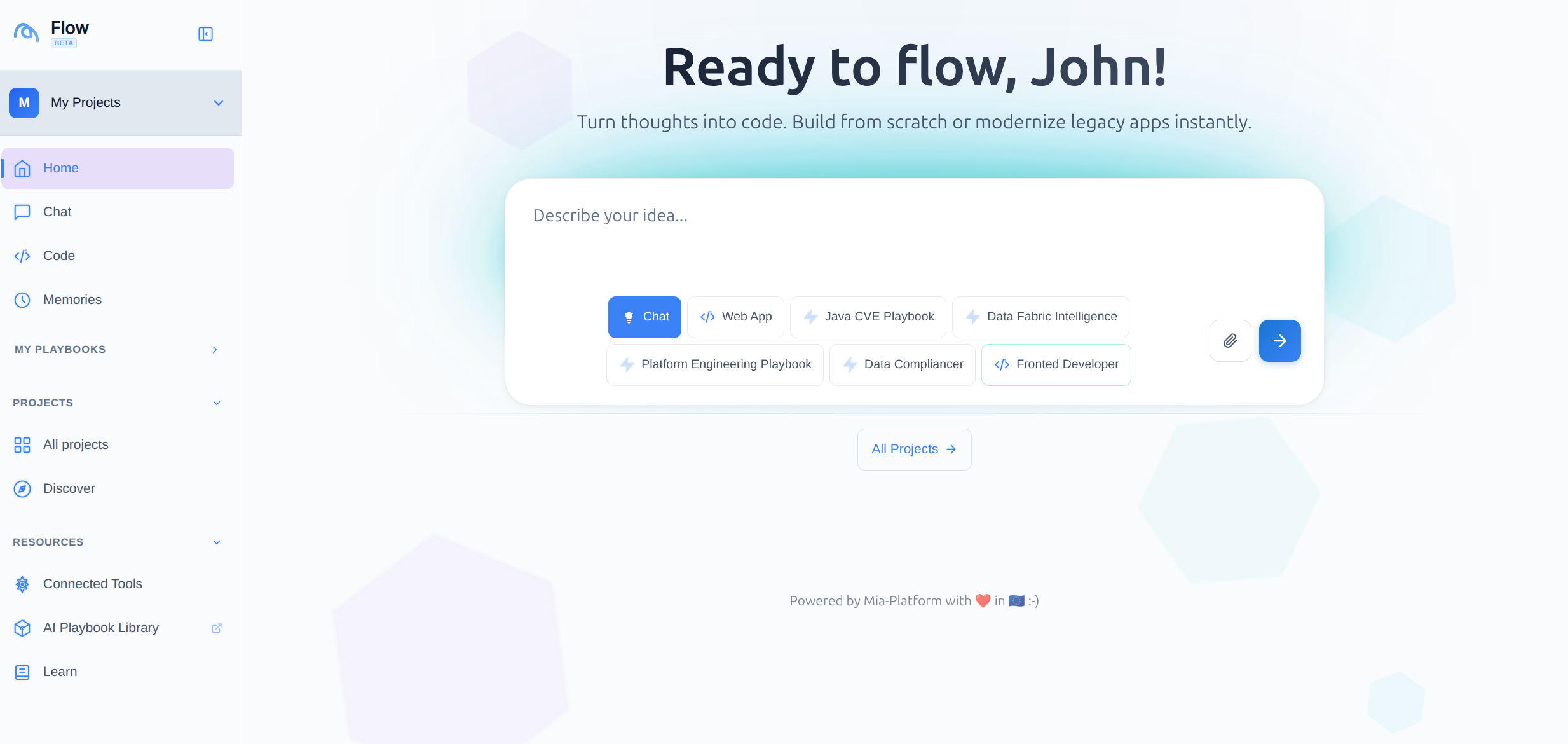
Flow is an AI-driven development environment: you open it in the browser, describe what you want to build in natural language, and the assistant generates the code, renders it in a live preview inside the Canvas, and deploys it to a Mia-Platform project when you are ready.
It connects to the tools your team already uses (GitHub, GitLab, Atlassian, Grafana, Mia-Platform Console, and any custom MCP server) and lets you manage reusable AI building blocks such as agents, skills, prompts, and playbooks directly from the interface.
Flow is available only in private preview.
Discover all the details in the Flow documentation.
Data Catalog
Data Catalog Column Lineage
The Data Catalog now supports Column Lineage, enabling users to inspect and trace upstream and downstream column relationships for a more granular, end-to-end view of their data.
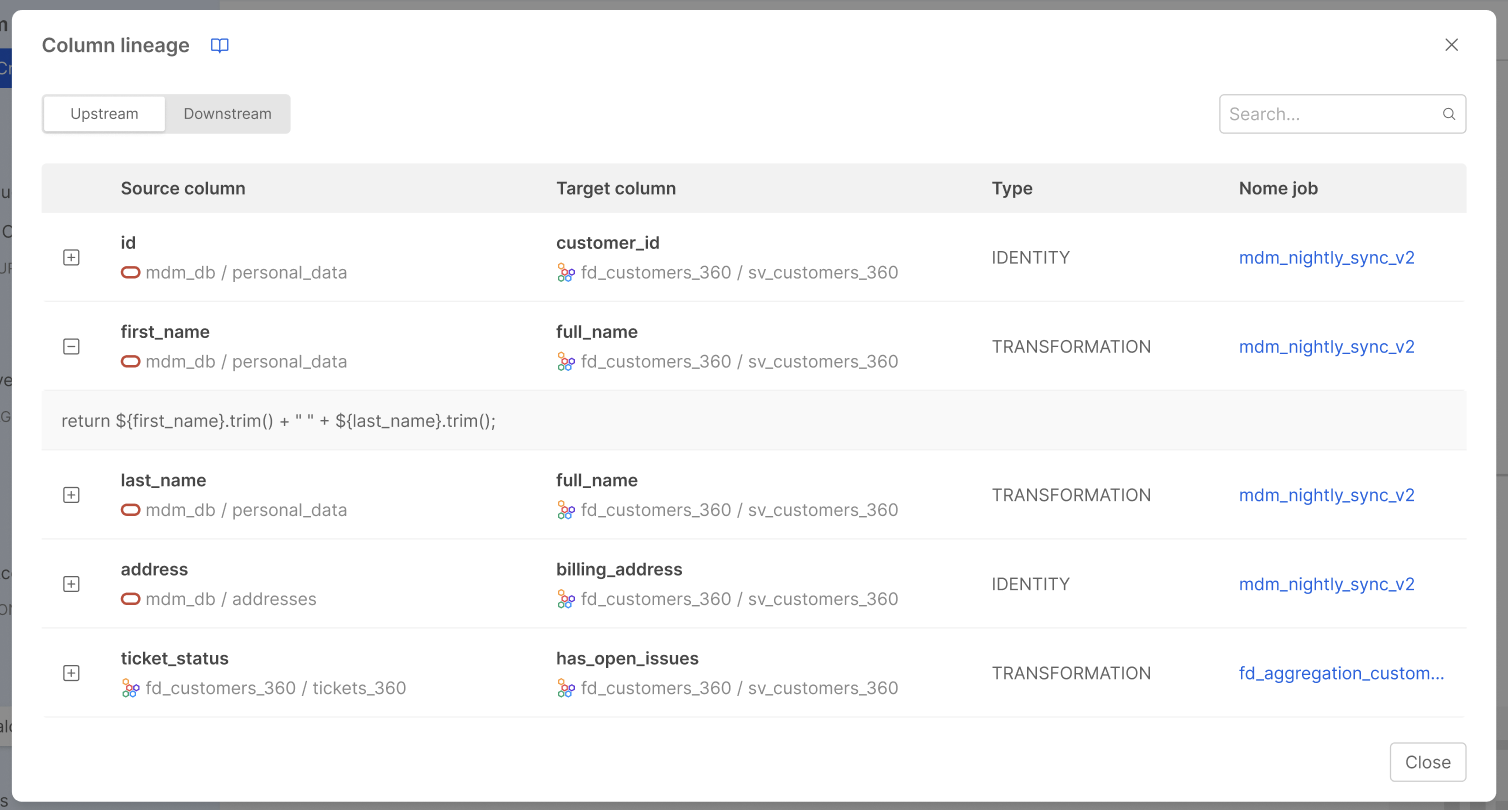
While Table-level and System-of-Record-level lineage give a structural picture of how data flows across tables and systems, Column Lineage goes deeper: for each Job connecting two tables, users can now document exactly which columns feed into which, and what kind of transformation ties them together.
Discover all the details in the Column Lineage documentation.
Business Glossary v15 FALL
The Data Catalog now includes a Business Glossary, enabling users to define a shared business vocabulary and connect it directly to their data assets.
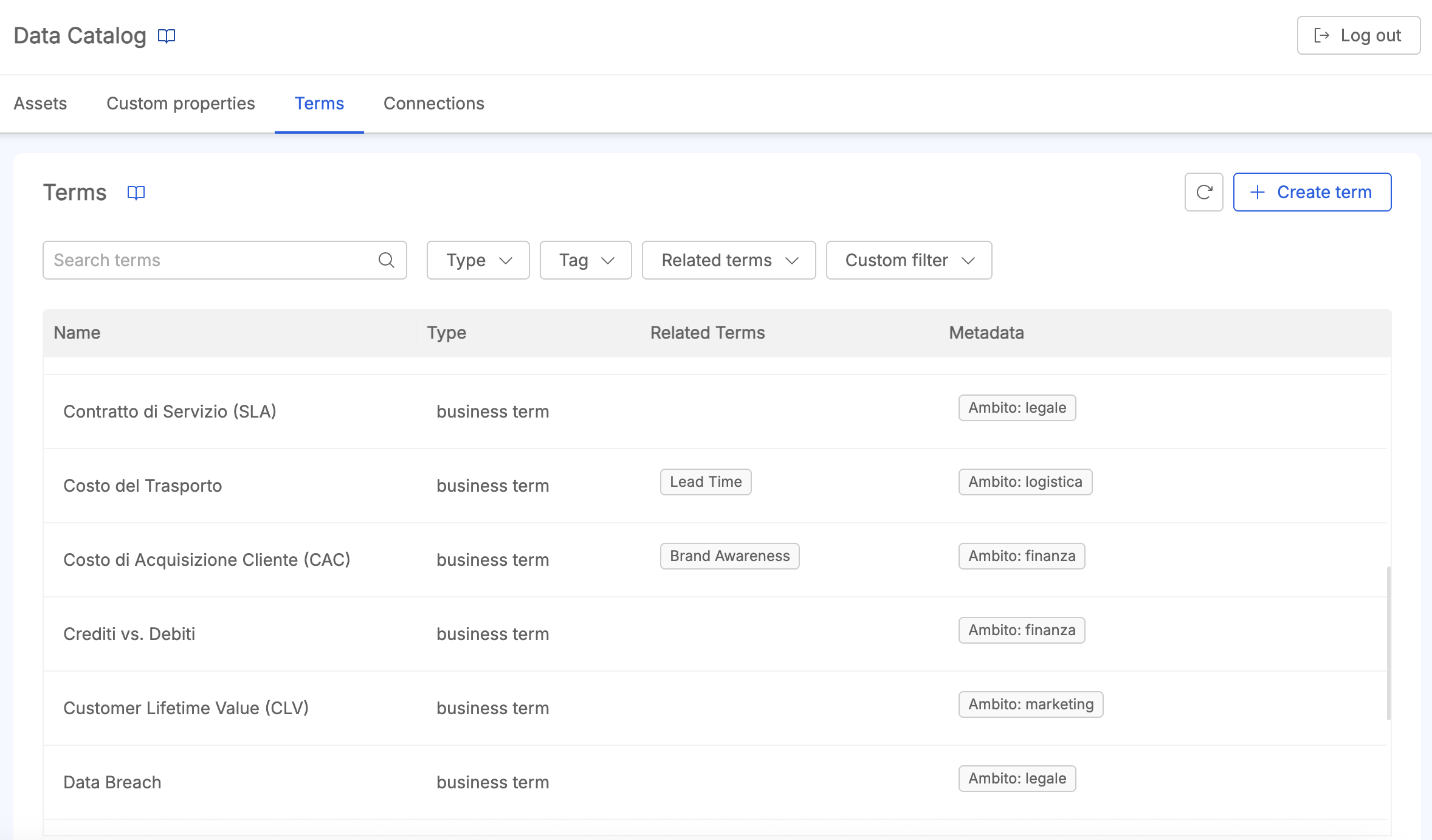
While technical metadata describes how data is structured and where it comes from, the Business Glossary adds the business meaning behind it: users can define terms describing business concepts, metrics, or definitions, and link them to the data assets they refer to, bridging the gap between business language and technical metadata.
Discover all the details in the Business Glossary documentation.
Fast Data Control Plane v2
The Fast Data Control Plane v2 is the new runtime management solution for Fast Data v2 pipelines.
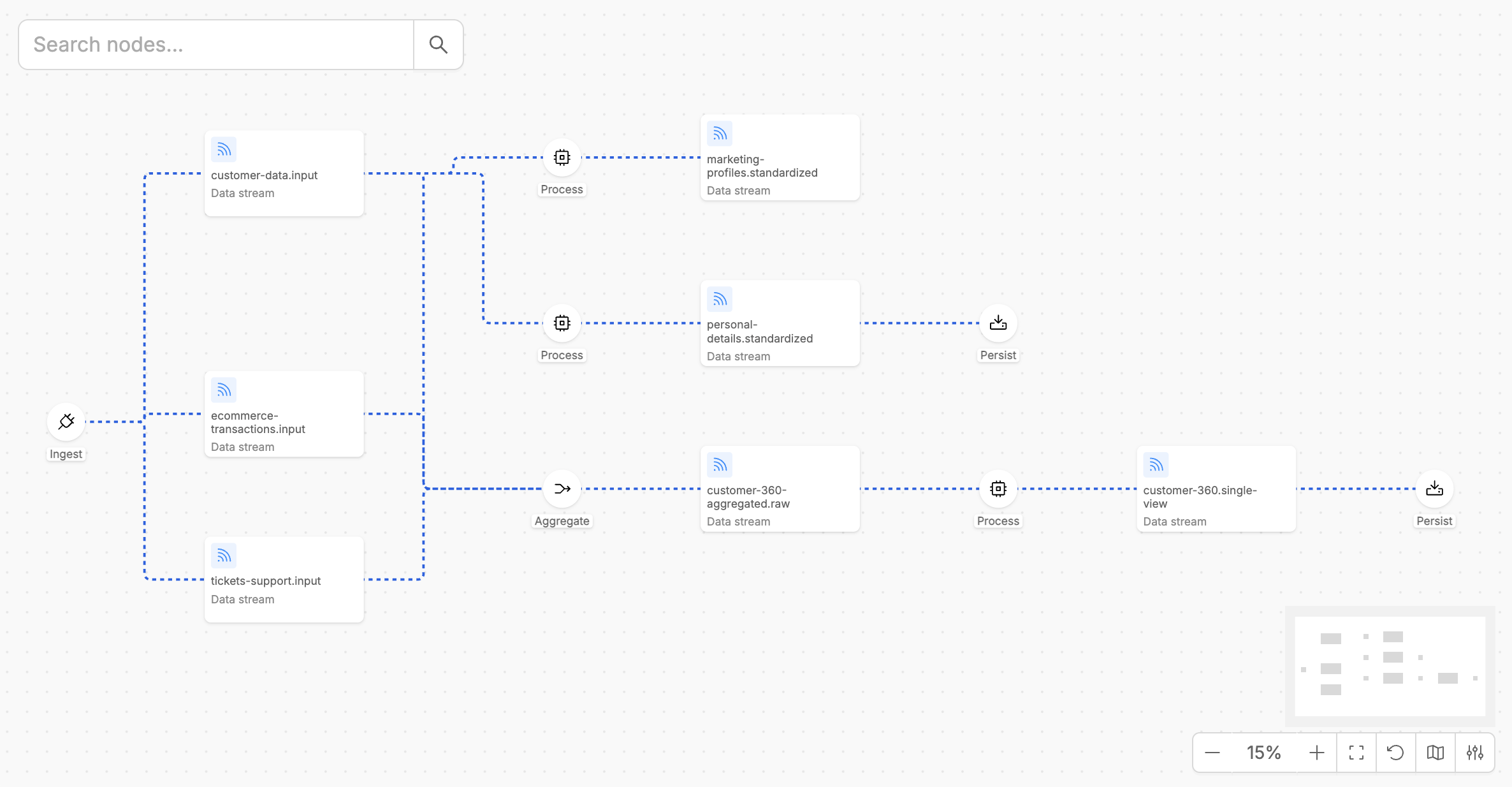
It provides a general overview of all Fast Data v2 pipelines running in your environment, allowing you to monitor and govern the execution steps of your data pipelines in real time, building on the performance and modularity introduced by the Fast Data v2 workloads suite.
Discover all the capabilities and benefits of Fast Data Control Plane v2 in the official documentation.
Console
Bitbucket Cloud Support in Console
Console now supports Bitbucket Cloud as both a Git Provider and a CI/CD Tool, enabling teams that rely on Bitbucket to fully integrate their project workflows, from repository provisioning to pipeline execution.
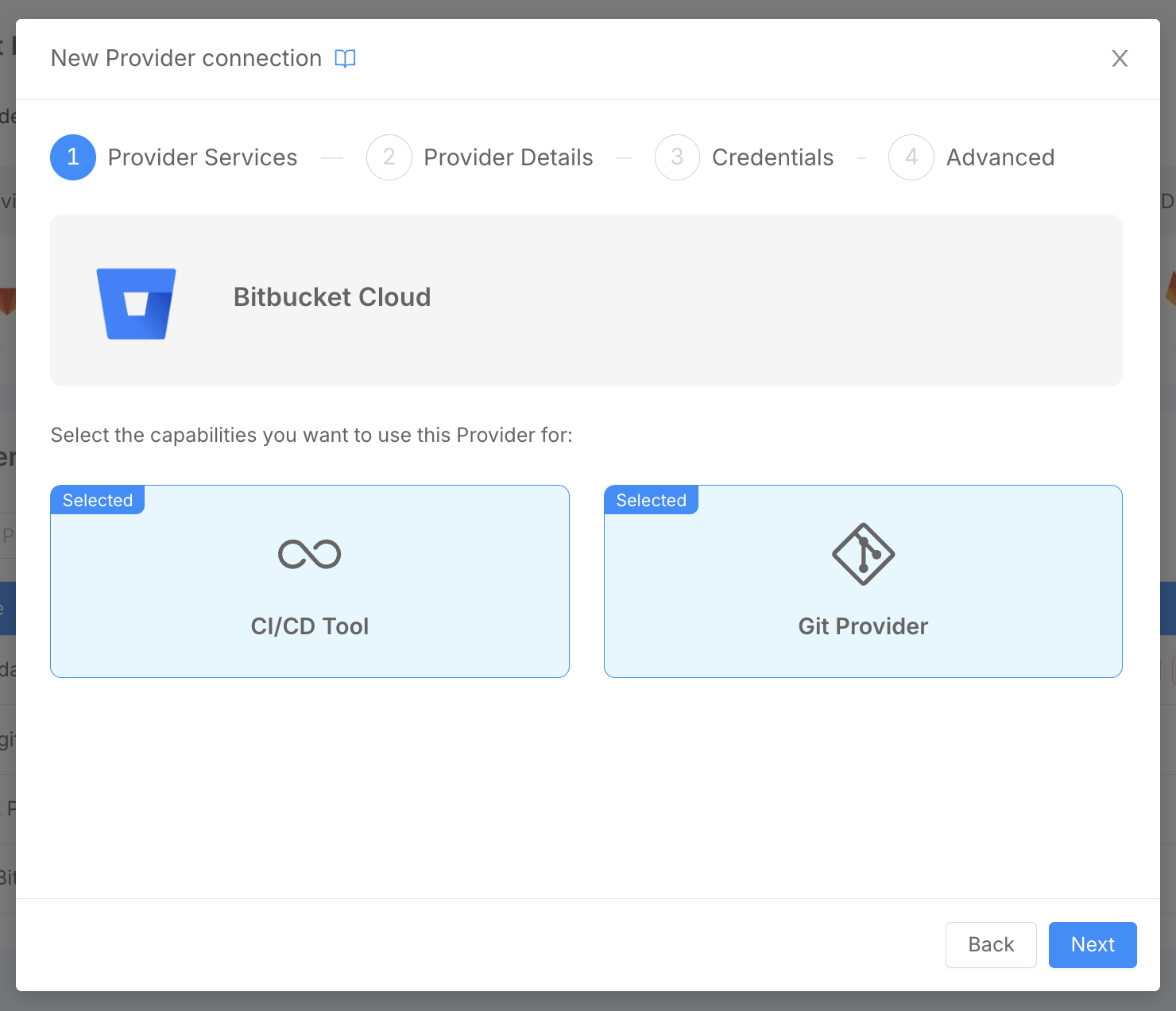
Configuring Bitbucket Cloud as a Git Provider allows users to set up Console Projects whose Git repositories reside in a Bitbucket workspace. For CI/CD, Console will trigger Bitbucket pipeline executions on the target repository at deploy time, following the same flow already available for other supported providers.
Discover how to configure Bitbucket Cloud as a Git Provider and set up Bitbucket Pipelines in the Configure a Provider and Configure Bitbucket Pipelines documentation pages.
Helm Charts Design and Deploy with Kustomize
The Console Design Area now includes a dedicated Charts section for Console Projects using the Enhanced Workflow.
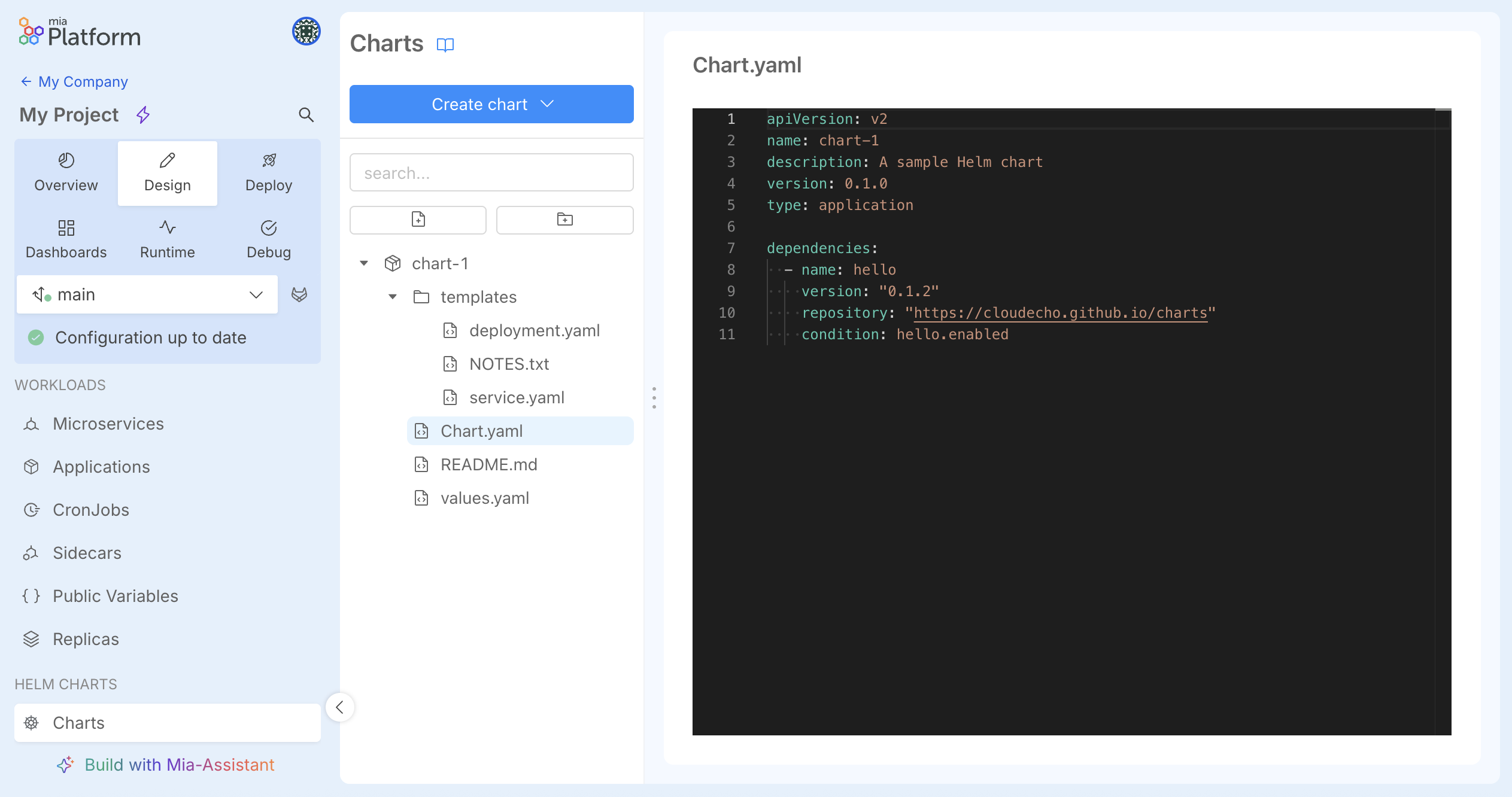
In this section, teams can manage Helm Charts configurations leveraging an integrated Monaco editor that provides Helm-aware syntax highlighting, linting, schema-driven validation of values.yaml, and live autocompletion of .Values.* paths inside templates.
At deploy time, the Console generates the chart output and the pipeline applies it to the cluster using a Kustomize-based deploy strategy.
Discover all the details in the Helm Chart documentation.
New Interface for Configuration Merge
A new interface for merging configurations has been introduced in the Console Design Area.
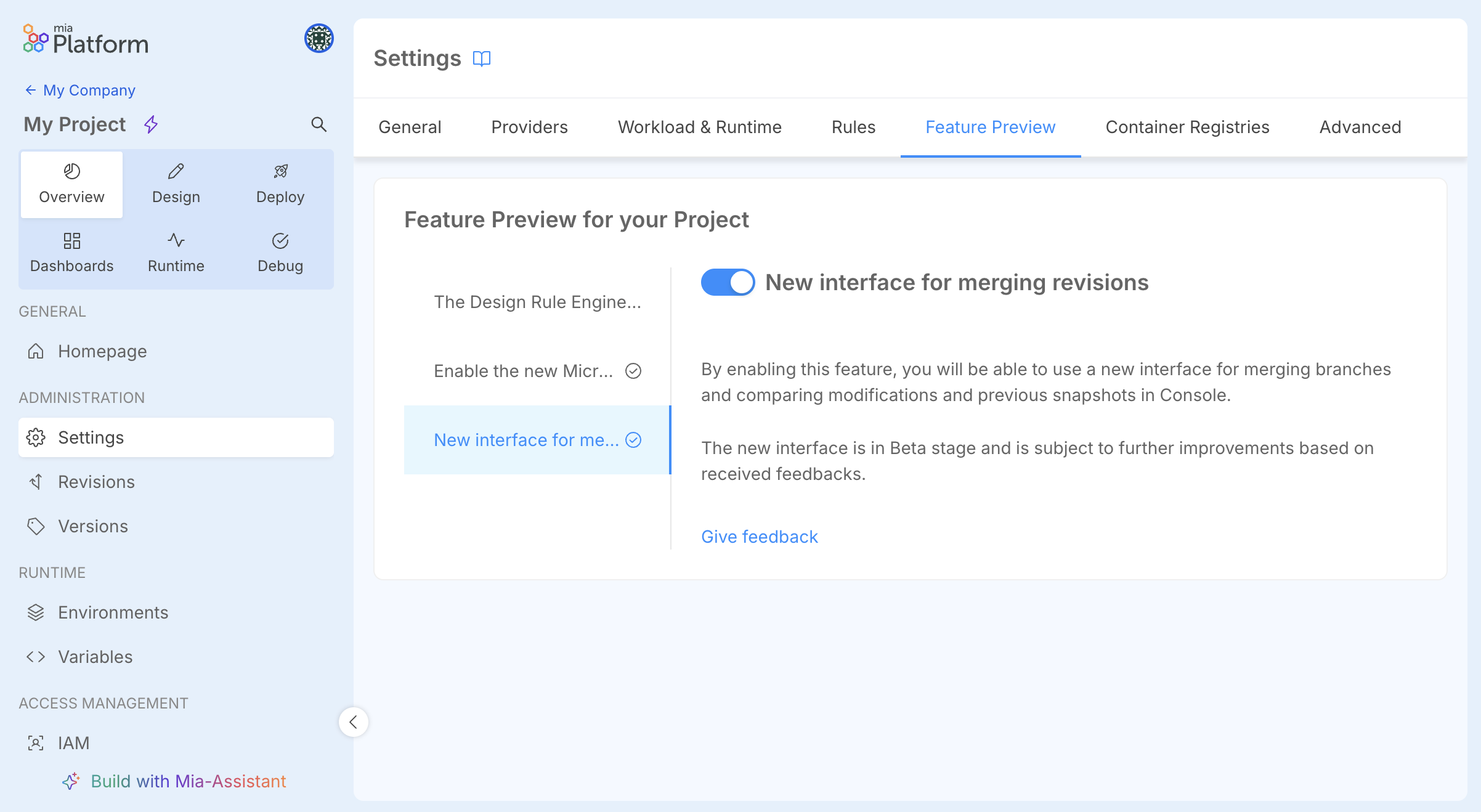
The new interface aims at improving DevX in comparing and merging configurations when working on branched revisions, providing a clearer, more intuitive diff view.
When working with branched revisions in the Design Area, users can now take advantage of a redesigned merge interface that provides a clearer, more intuitive diff view of the changes between revisions, making it easier to compare and merge configurations with confidence.
To try it, go to the Feature Preview section inside your Project settings and activate it!